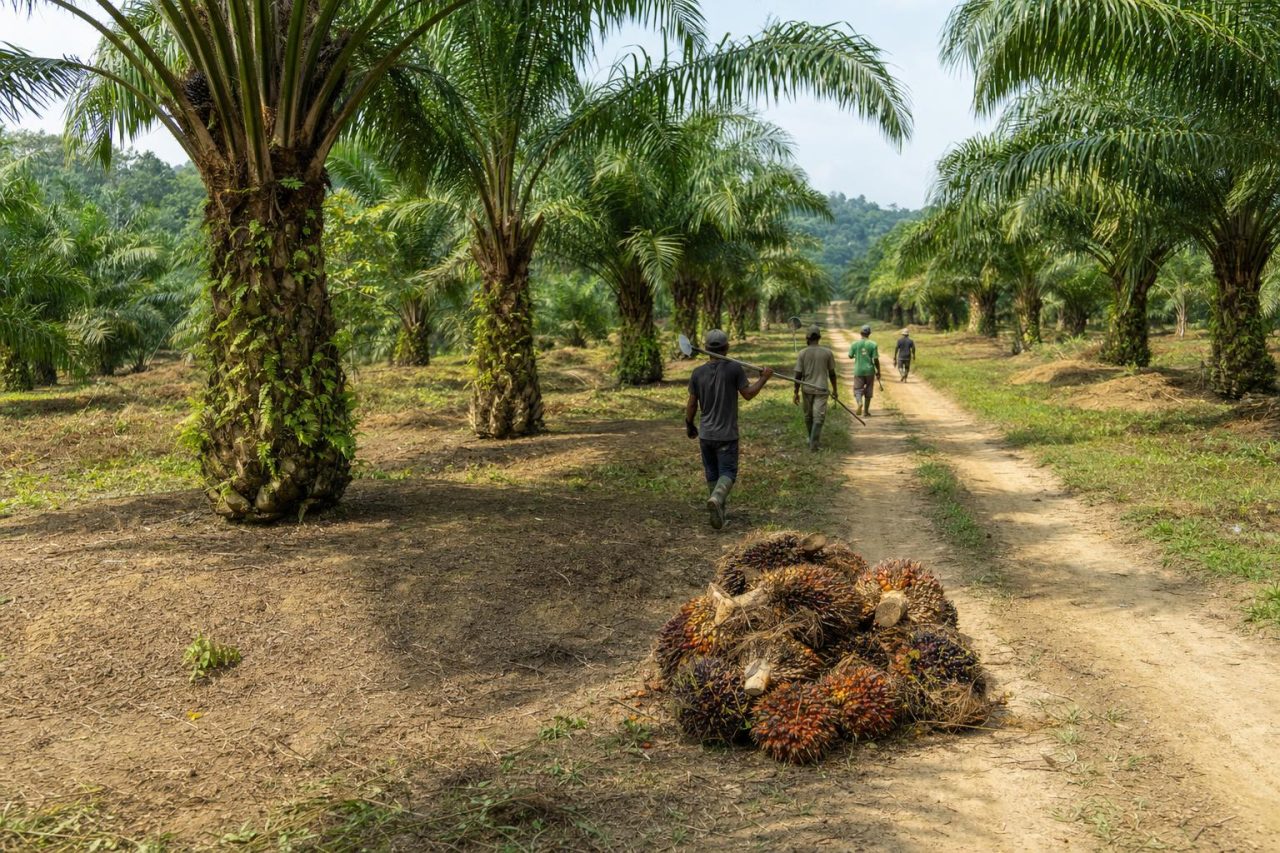
Estate workers walking an oil palm estate road past a stack of harvested fresh fruit bunches
Fourteen stages

The agricultural lifecycle

Each stage depends on the one before it. Skipping ahead is how estates fail.

Soil testing is complete, and land preparation is under way across the confirmed 70-hectare estate allocation. See the Transparency page for current status.

  1. Land verification

    Confirm ownership, boundaries, encumbrances and community agreements before anything else is spent.

  2. Survey and mapping

    Produce an accurate map of the parcel, its access points and its natural features.

  3. Soil testing

    Sample and analyse soils to confirm crop suitability and plan fertilisation.

  4. Drainage and topography assessment

    Identify slopes, watercourses and waterlogged areas; separate plantable from non-plantable land.

  5. Site preparation

    Clear, lay out roads and blocks, and prepare planting positions according to the design.

  6. Nursery and seedling sourcing

    Secure certified planting material from reputable sources; raise or harden seedlings as required.

  7. Planting

    Plant at the recommended spacing and season, with cover crops and initial fertilisation.

  8. Maintenance

    Weeding, circle clearing, fertilisation, pest and disease control through the establishment years.

  9. Field monitoring

    Regular inspection and record-keeping of plant health, losses and replacements.

  10. Harvesting

    Once mature, harvest in rounds at the correct ripeness for quality and price.

  11. Transport

    Move produce promptly to buyers or processing to preserve quality.

  12. Sales or processing

    Sell fresh produce to established buyers, or process where volumes justify it.

  13. Financial reconciliation

    Match sales, costs and inventory; produce approved records.

  14. Reinvestment and expansion

    Apply surplus to maintenance, reserves and approved future expansion.

Crop by crop

Oil palm, Cocoa, Coconut, Mango

Each crop has its own establishment period, maintenance routine and market. The summaries below describe the general process, not Qimo Farms results.

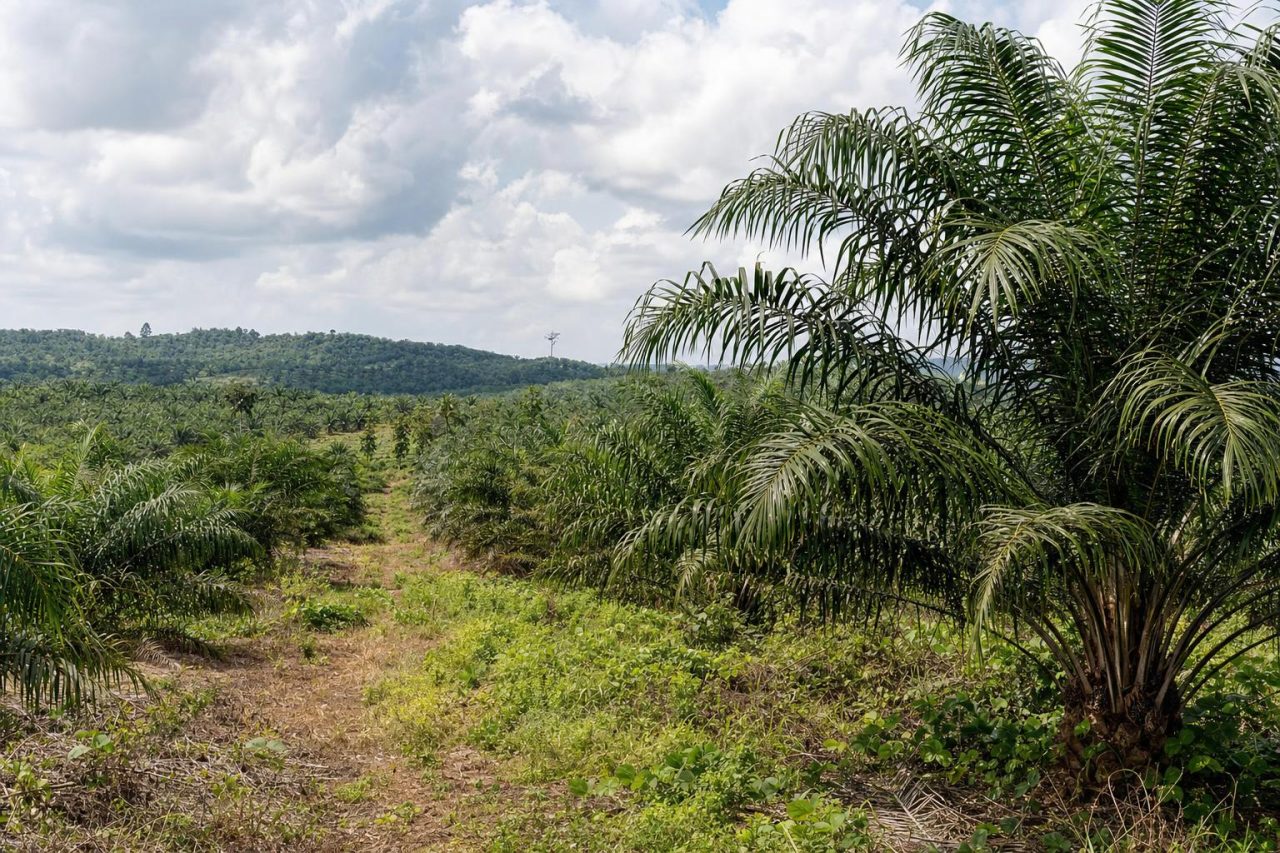
Young oil palm plantation with a grassed access path between rows

Oil palm

Elaeis guineensis

Oil palm is a primary commercial crop managed through structured field blocks, establishment maintenance and long-term plantation operations.

Establishment: selected planting material is established at approved spacing, supported by field layout, ground cover and initial maintenance.

Juvenile growth: palms receive regular weed management, fertilisation, monitoring and replacement of failed plants as required.

Early production and harvesting: harvesting rounds begin only when fruit reaches the appropriate maturity, with fresh fruit bunches handled promptly for quality.

Potential processing: processing may be considered where volumes and commercial conditions support it.
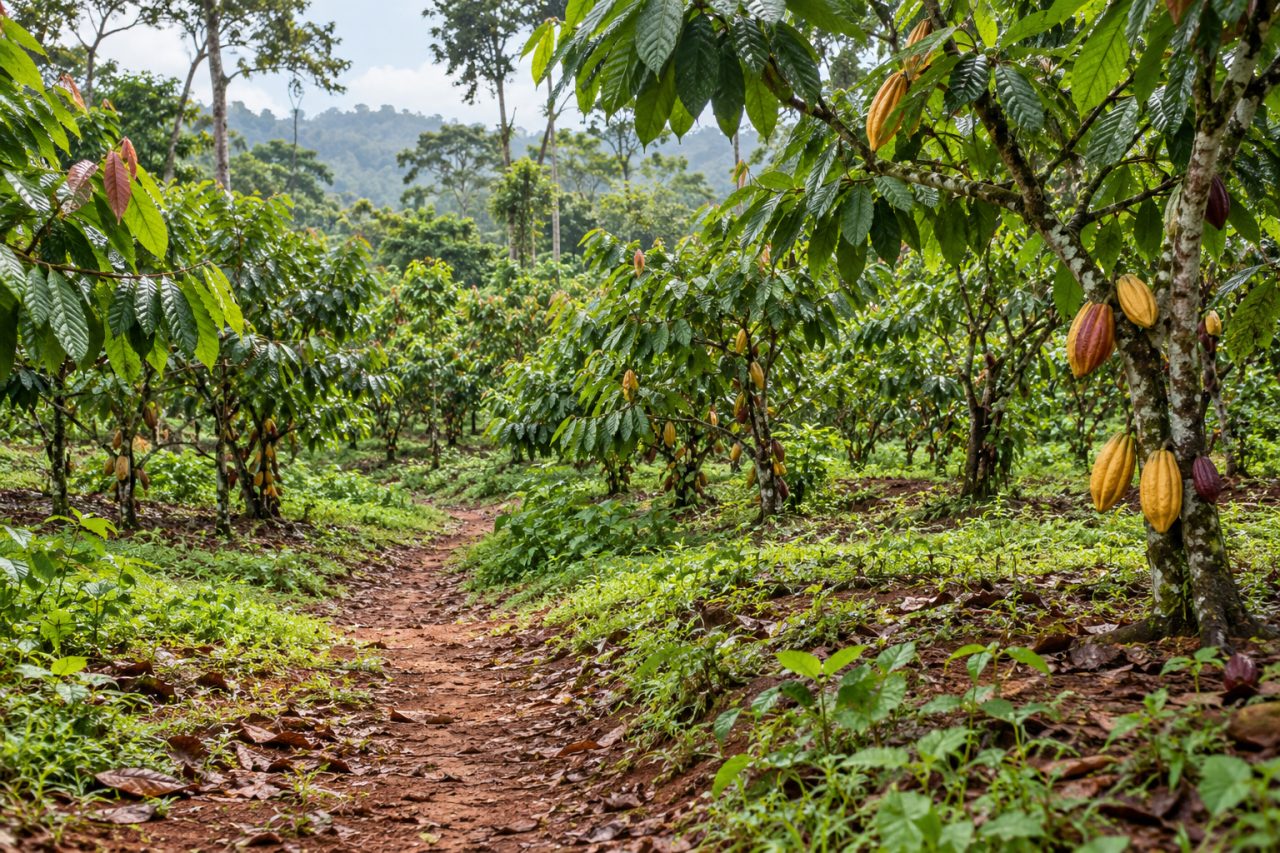
Illustrative view of a cocoa farm with cocoa trees and a soil path

Cocoa

Theobroma cacao

Cocoa is one of Qimo Farms’ four primary commercial crops, established through structured field layout, shade planning and early field management.

Establishment: land is prepared using appropriate selective clearing, layout and shade planning. Quality planting material is established at approved spacing and supported through early field management.

Juvenile growth: young cocoa trees require weed management, shade management, replacement of failed plants, nutrition and monitoring for pests and diseases.

Early bearing: trees enter productive stages according to variety, field conditions and management. Harvesting begins only when pods reach appropriate maturity.

Production: mature cocoa trees are harvested in rounds. Pods are opened, beans are fermented and dried according to the selected post-harvest process before sale.

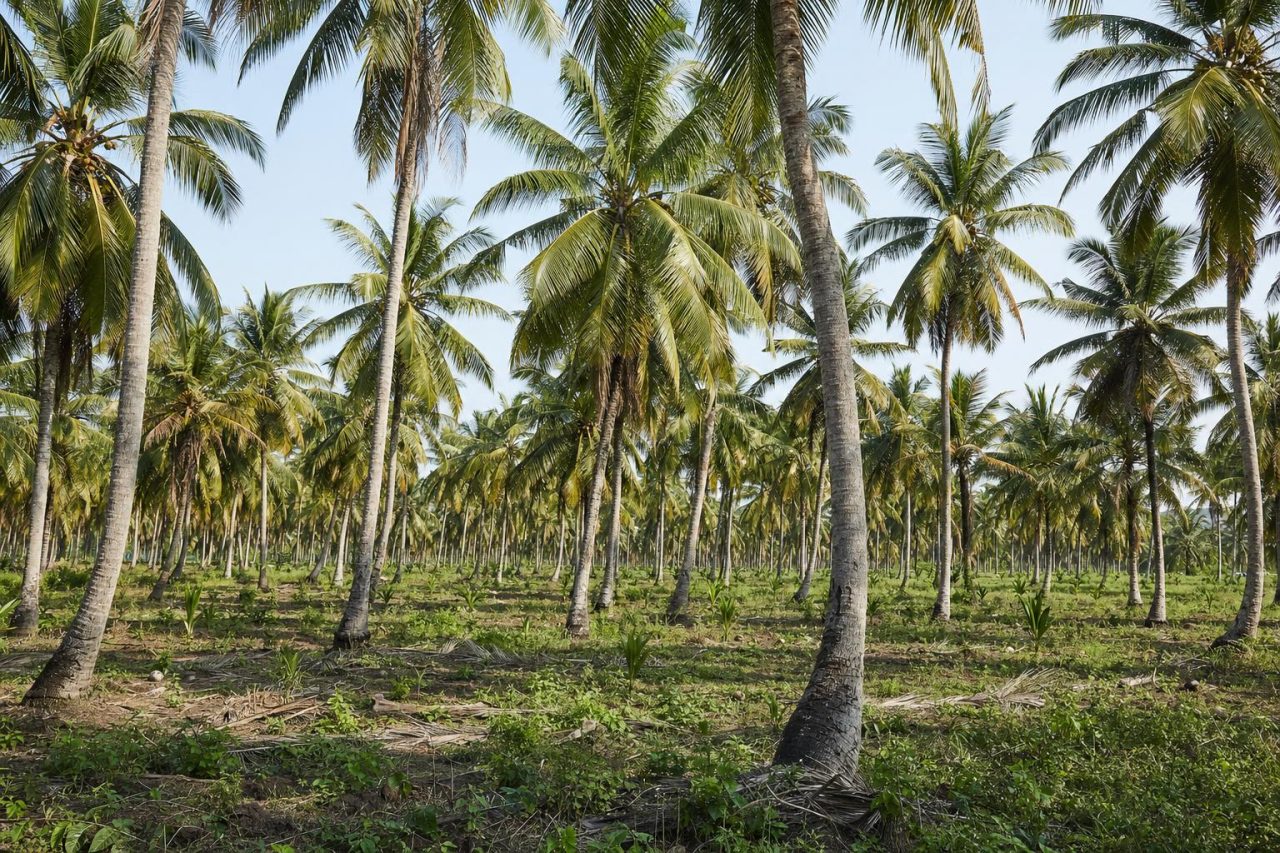
Coconut plantation with tall palms over natural ground cover

Coconut

Cocos nucifera

Coconut is a primary commercial crop developed with quality planting material, appropriate spacing, drainage and long-term field maintenance.

Establishment: quality planting material is established with attention to field layout, spacing and drainage.

Juvenile growth: young palms receive regular maintenance, weed management and monitoring as the field develops.

Bearing and harvest: coconuts are harvested when appropriate for fresh and processing-market uses. Timing depends on variety, field conditions and management.

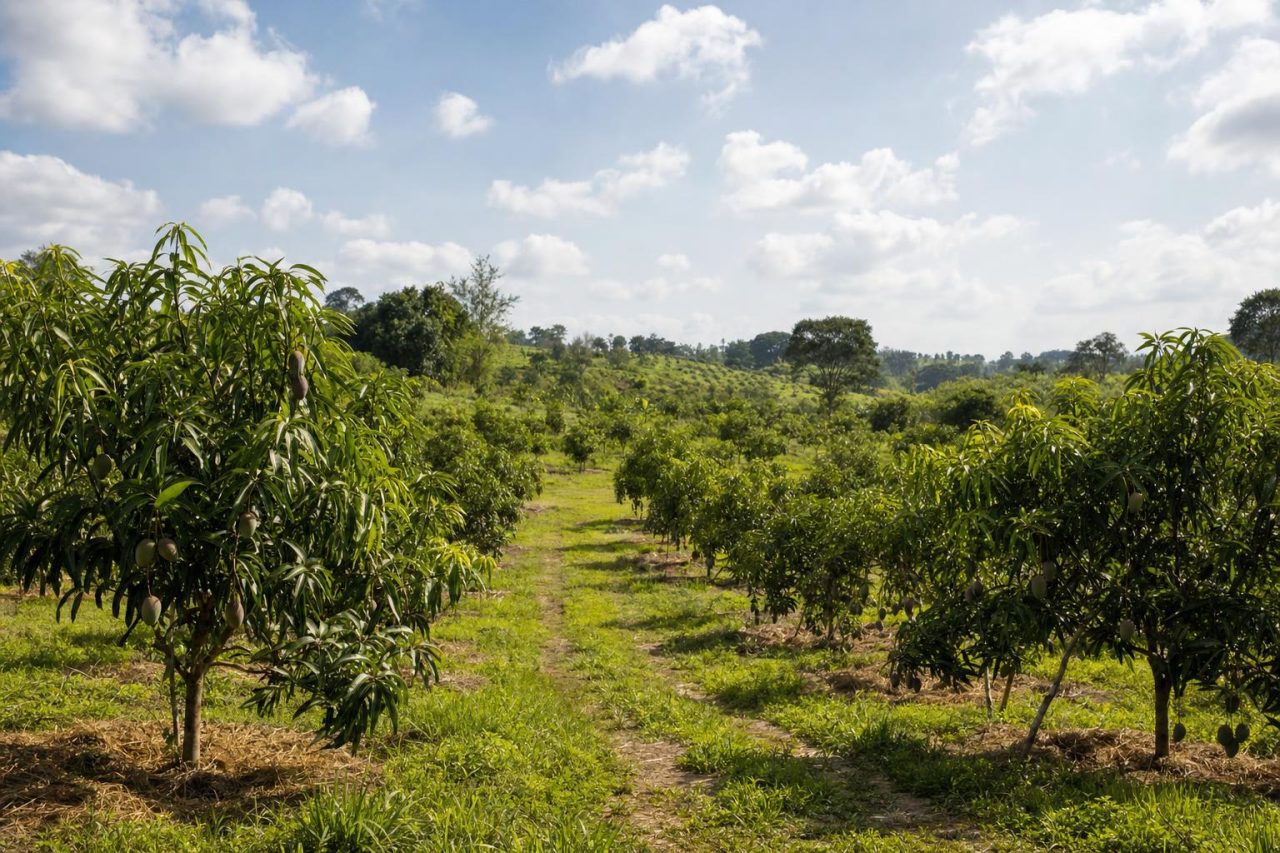
Young mango orchard with a grassed path between rows of fruiting trees

Mango

Mangifera indica

Mango is a primary orchard crop developed with grafted or improved planting material for fresh and processing-market opportunities.

Establishment: grafted or improved planting material is established in a structured orchard layout and protected through early growth.

Juvenile growth: training, pruning, weed management and routine maintenance support healthy orchard development.

Flowering, fruiting and harvest: fruit is harvested at the appropriate maturity for fresh and processing-market uses.

Qimo Farms publishes operational and financial information when supported by verified farm records and approved reporting data.

Plain language

How the business generates revenue

An agricultural business earns money only when produce is sold. The terms below are used consistently across this website and in our reporting.

Potential agricultural revenue channels

  1. Oil palm produce. Fresh fruit bunch sales to processors or aggregators, with possible future processing where commercially appropriate.
  2. Cocoa produce. Sale of properly harvested and processed cocoa beans through appropriate market channels.
  3. Coconut produce. Sale of coconut products through fresh and processing markets.
  4. Mango produce. Sale of fresh mango and potential processing-market output.
  5. Intercrop production. Where agronomically appropriate, short-cycle crops may generate operational farm revenue during establishment phases.
  6. Agricultural value-chain activities. Nursery, logistics, processing, farm-management or related agricultural services where developed.
  7. Future approved agricultural activities. Additional agricultural activities introduced by Tera Farms management as the business expands.

Revenue is not profit

Revenue
Money received from sales or other legitimate business activities.
Operating costs
Expenses required to run the business: labour, inputs, fuel, maintenance, management, administration.
Gross profit
Revenue minus applicable direct costs, according to the selected accounting approach.
Net profit
Profit after relevant operating, administrative, financing, tax and other allowable expenses.
Distributable profit
The amount legally and operationally available for distribution after required deductions and reserves. Gross revenue is never distributable profit.

Gross revenue is never presented as profit, and no participant is promised a fixed percentage of gross sales.

Chat on WhatsApp